Learn. Practice. Test. Revise. The four steps, automated where it matters.
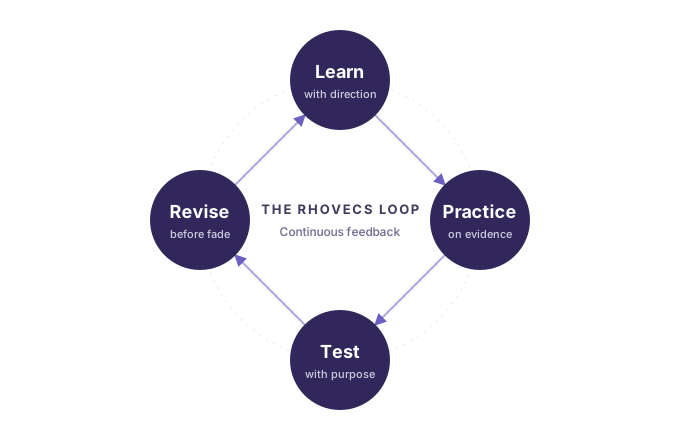
Every JEE student goes through the same cycle:
Learn → Practice → Test → Revise
Each step is harder than it looks.
Students do not just need more content, more questions, or more tests. They need a system that helps them decide what to do next, understand why they are stuck, and keep improving without losing track of hundreds of concepts.
That is what Rhovecs is built for.
Learn with direction
Rhovecs builds a path toward mastery using a concept dependency graph.
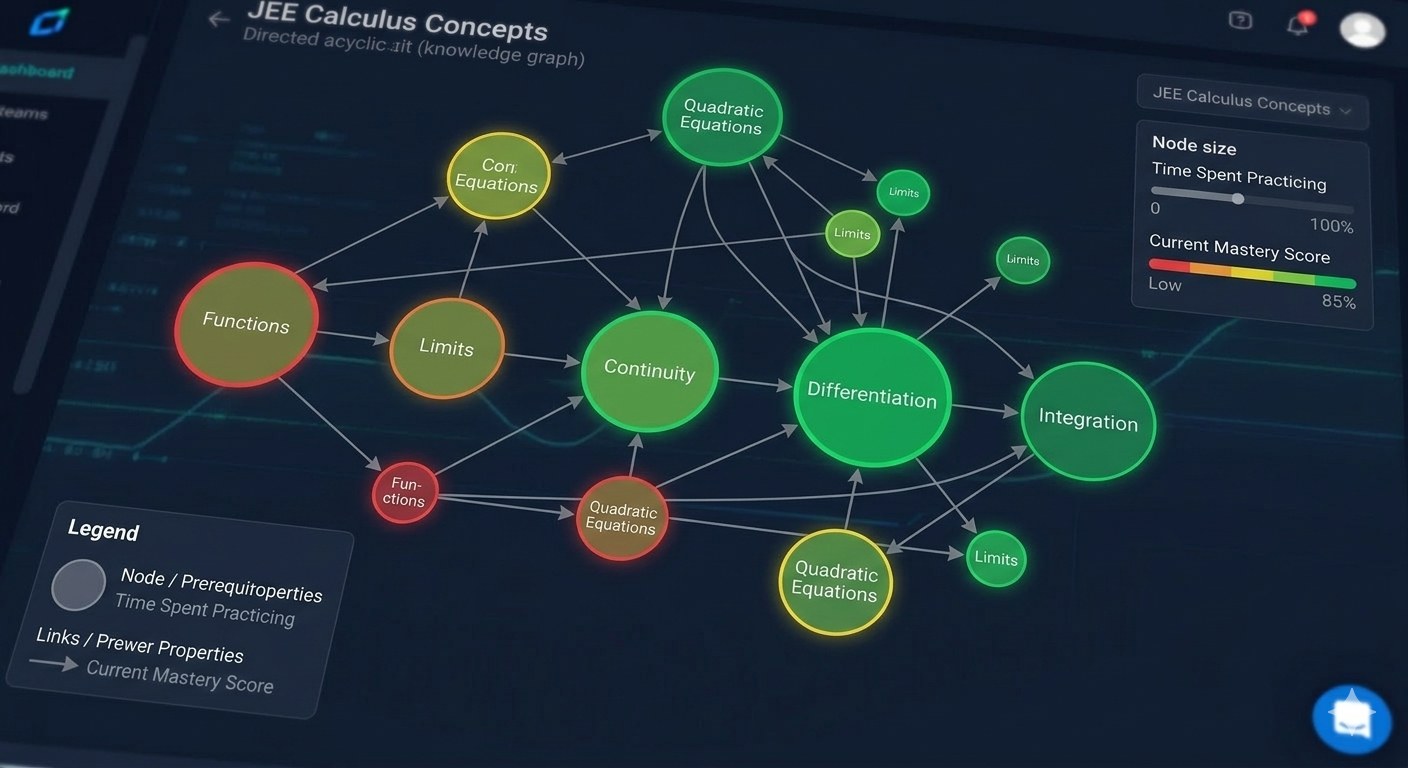
The student’s Today’s Focus topic is not random. It is one step in a larger path: prerequisites, current concept, problem patterns, and mastery evidence.
For example, Electromagnetism will not surface as a focus while Vector Calculus is still unstable. The graph blocks it. When Vector Calculus firms up, Electromagnetism unlocks automatically — no manual planning required.
When the student needs help learning, Rhovecs constructs a highly contextual prompt the student can use with any AI assistant — ChatGPT, Gemini, Claude, whichever they prefer. The deterministic engine owns the context; the student picks the model. Curated formulas and concise revision notes ship alongside.
The prompt is not generic. It carries the student’s current concept, prerequisite gaps, and recent mistakes — so the AI works with real context, not just what the student typed into a box.
Practice without blindness
Practice is where most students waste the most time.
They solve questions, but often do not know whether they are covering the right patterns, repeating the same mistakes, or avoiding weak areas.
Rhovecs makes practice evidence-driven.
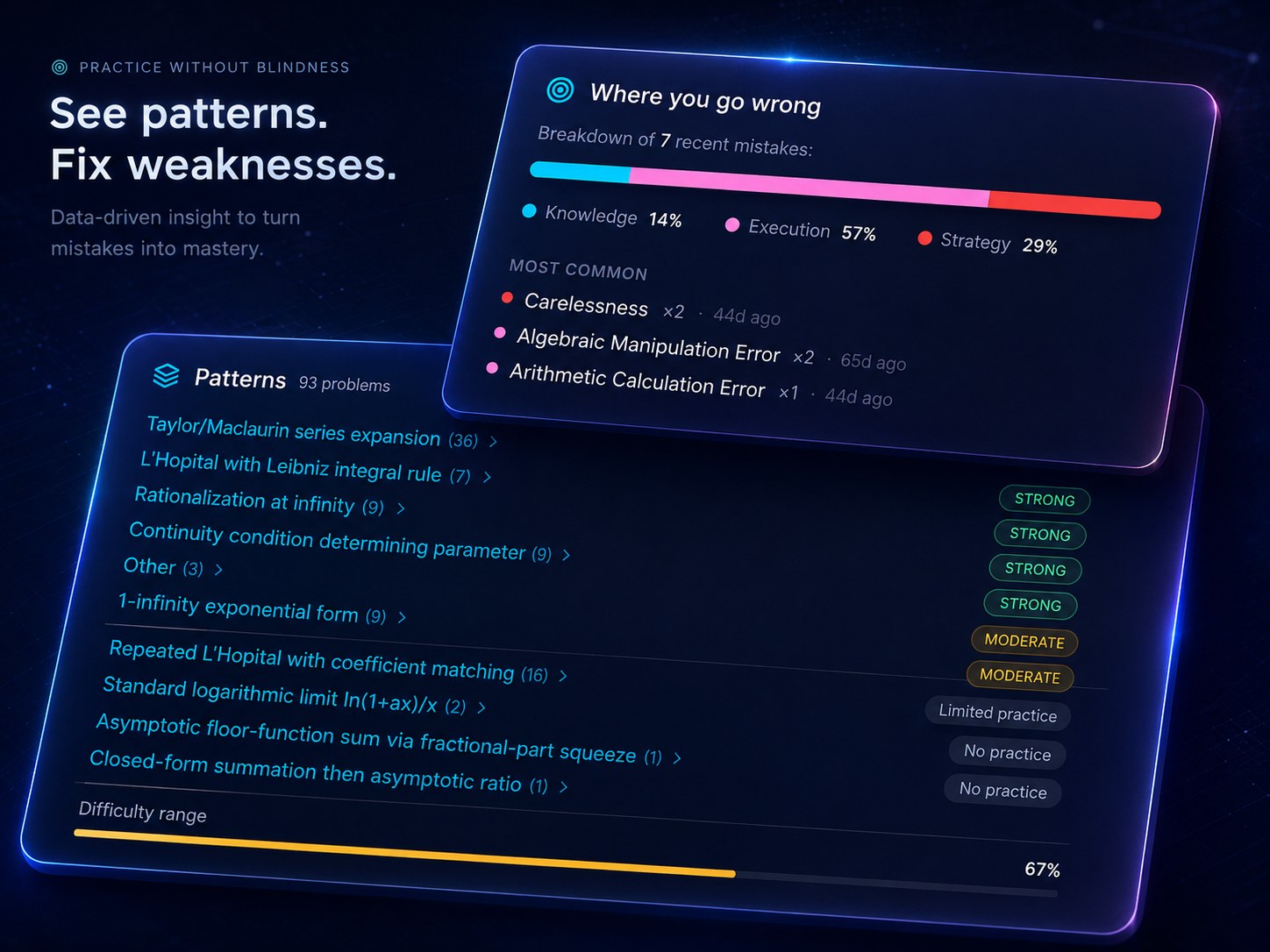
It knows which concept a problem tests, which pattern it belongs to, whether the student has solved similar problems before, and what a wrong option may indicate.
For example, a student who fails a Rotational Mechanics question does not just see “you missed this chapter.” Rhovecs identifies that the failure was on Conservation of Angular Momentum under off-center collisions, and serves drills targeting that exact technique — not the chapter as a whole.
A wrong answer is not treated as just wrong. It becomes evidence.
Rhovecs classifies the mistake and tells the student what kind of repair is needed: relearn, revise, or practice again.
Test with purpose
Rhovecs generates mock tests and custom practice papers on demand.
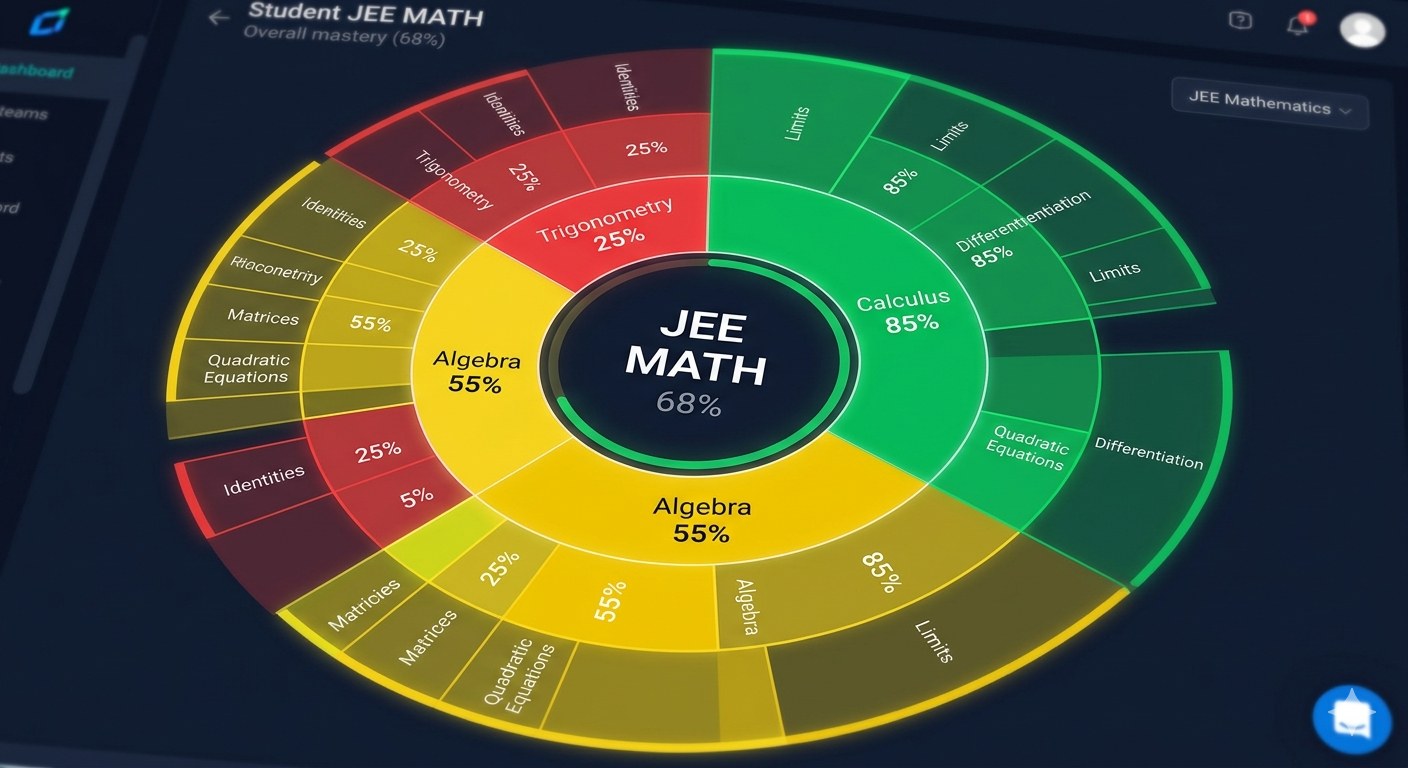
But the system does not generate tests blindly. It builds them from the student’s own evidence: strengths, weaknesses, weak patterns, forgotten concepts, and readiness gaps.
So tests become more than a score on a screen. They become part of the improvement loop.
Revise before forgetting becomes failure
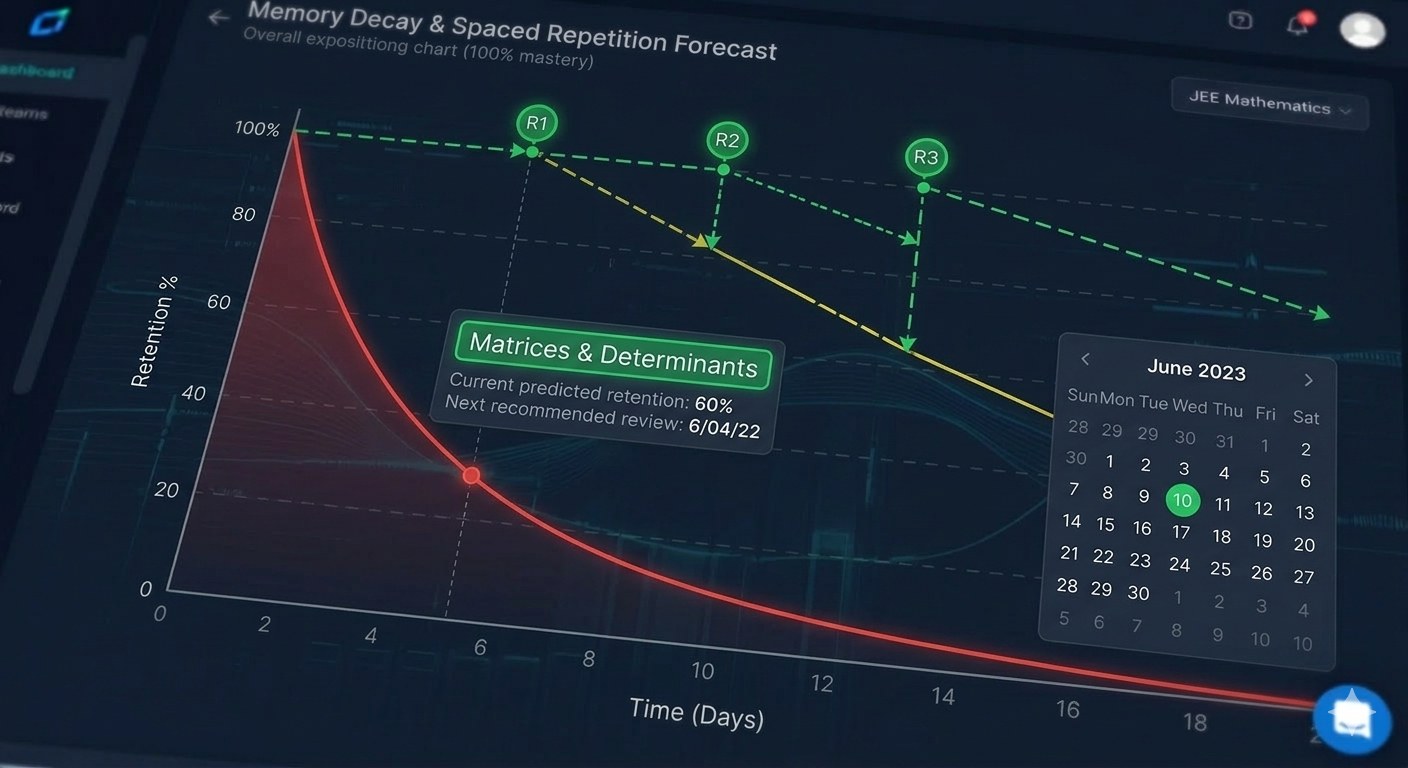
Students forget old topics silently while moving to new ones.
A concept mastered in January is at real risk by mid-April. Three months without active recall is enough for retention to drop sharply. By exam day in May, the chapter that felt solid feels foreign.
Rhovecs tracks forgetting risk per concept and automatically surfaces a prioritised review queue before concepts decay too much.
The student does not need to maintain a revision calendar. Rhovecs ranks what is due and works through it session by session.
The Rhovecs loop
Rhovecs turns JEE preparation into a continuous feedback system:
Learn the right concept. Practice the right patterns. Detect the real mistake. Test with purpose. Revise before forgetting. Move one step closer to mastery.
For students, Rhovecs reduces confusion. For parents, Rhovecs gives visibility. For the work itself, Rhovecs turns daily effort into measurable mastery.
Rhovecs’s 14-day full trial puts the engine in your hands. No card required. Start at jee.rhovecs.com.